How to Get Your Plumbers License in NYC: Complete 2026 Guide
February 11, 2026How Much Does Drain Cleaning Cost in NYC? 2026 Price Guide
April 19, 2026| QUICK SUMMARY — 5 Steps to Take Right Now |
| 1. Get away from any electrical outlets or appliances near the water. |
| 2. Shut off the water valve under the sink or toilet — or call your super. |
| 3. Call your landlord. Text them too. Document everything with photos. |
| 4. Contain the water with towels and buckets. Move valuables off the floor. |
| 5. Call an emergency plumber in NYC. Don’t wait until morning. |
It’s 2 a.m. You wake up to the sound of rushing water. You flip on the bathroom light — and your heart drops. Water is everywhere. A pipe has burst in your NYC apartment, and you have no idea what to do first.
Take a breath. Seriously.
A pipe burst in a New York City apartment is more common than you think — especially in older buildings during the winter months. It feels like a disaster. But if you know the right steps, you can stop the damage fast and get back to normal sooner than you’d expect.
Here’s exactly what to do, in order.
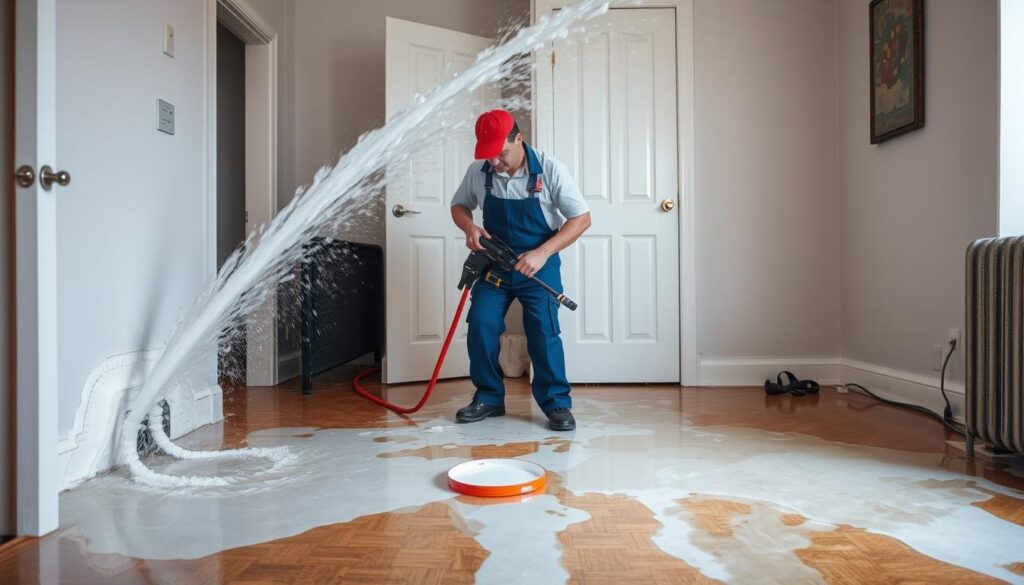
Step 1 — Don’t Panic. Do This First.
Before you grab a mop or call anyone, stop and look around you.
Is water near any electrical outlets? Near your fuse box or any plugged-in appliances? If yes, do not touch anything electrical. Step away from that area first. Water and electricity are a dangerous combination — and nothing in your apartment is worth your safety.
Once you know you’re clear of any electrical hazards, take a quick 10-second look. Where is the water coming from? Is it still flowing fast, or has it slowed to a drip? Is it one spot or multiple areas?
Grab your phone. You’re going to need it — and the faster you move from here, the less damage you’ll end up dealing with.
Step 2 — Shut Off the Water. Here’s How.
This is the single most important thing you can do right now. Stop the water, and you stop most of the damage.
In almost every NYC apartment, each sink and toilet has its own shutoff valve. It’s usually a small oval knob or lever right underneath the fixture — behind the toilet tank, or inside the cabinet under the sink. Turn it clockwise (righty-tighty) to close it off.
Can’t find the valve, or is the burst somewhere else in the apartment? You’ll need your building super to shut off the main water supply. That main shutoff is almost always in the basement.
| 💡 Pro Tip If you live in a co-op or condo, your apartment may not have its own shutoff. Know this before an emergency happens. Ask your super or building manager where the closest valve is — tonight, before you go to sleep. |
Don’t wait. Call your super right now, even if it’s 3 a.m. That is their job. That is what the emergency line is for.
Step 3 — Call Your Landlord (and Know Your Rights)
Once the water is off — or at least slowing down — call your landlord. Then text them too. Do both.
In New York City, landlords are legally required to respond to emergency plumbing repairs without delay. A burst pipe flooding your apartment absolutely qualifies as an emergency.
While you have your phone out, start documenting. Take photos and short videos of the water, the damage, and wherever the burst is. Do this before you clean a single thing up. That documentation protects you if there’s any dispute about repairs or damage costs later.
After your call, send a written message — even just a quick text — to confirm what you reported and when. A paper trail matters.
If your landlord doesn’t pick up and water is still running, don’t sit and wait. Move on to the next steps.
Step 4 — Limit the Water Damage Right Now
You’ve stopped (or slowed) the flow. Now the goal is to protect your apartment from as much damage as possible.
Grab every towel, bucket, and pot you can find. Soak up standing water and contain it. Move valuables, electronics, documents, and rugs off wet floors immediately. Every minute counts when it comes to water damage.
If water is dripping through your ceiling and you see a bulge forming, here’s a tip that sounds strange but works: carefully poke a small hole in the lowest point of the bulge with a screwdriver. This lets the water drain in a controlled stream instead of letting the ceiling collapse all at once.
| ⚠️ Watch Out for Mold Mold can start growing within 24 to 48 hours of water damage in a warm apartment. Open windows if you safely can. Air circulation slows mold growth significantly. If you see or smell mold after the pipe is fixed, report it to your landlord in writing immediately. |
Step 5 — Call an Emergency Plumber in NYC
Shutting off the water buys you time. It does not fix the pipe.
Even if the flooding has stopped, you need a licensed plumber to look at the damage. Burst pipes often cause hidden damage inside walls and under floors that you simply cannot see. If that’s left unaddressed, it leads to much bigger problems — and much bigger bills — down the road.
When you call, have this ready: where the burst is located, whether water is still flowing, and the type of pipe if you know it (copper, PVC, or galvanized steel).
Plumbing NYC is available 24 hours a day, 7 days a week. We respond to every call in New York City — Manhattan, Brooklyn, Queens, the Bronx, and Staten Island — and we arrive in under 30 minutes.
| Need a Emergency Plumbing Services in NYC Right Now? Plumbing NYC — Available 24/7. We arrive in under 30 minutes. 646-580-7524 Licensed • Insured • Certified • Serving All 5 Boroughs |
What Causes Pipes to Burst in NYC Apartments?
If you’re wondering how this happened, you’re not alone. A nyc pipe burst is one of the most common emergency calls we get — and the causes usually come down to a few things.
- Freezing temperatures. When water inside a pipe freezes, it expands. That pressure can crack the pipe right open. This is especially common in older NYC buildings where pipes run along exterior walls with little insulation.
- Old and corroded pipes. Many NYC apartment buildings have pipes that are 40, 50, even 80 years old. Over time, metal corrodes and weakens — until one day, it gives out.
- High water pressure. NYC’s water system can deliver high and fluctuating pressure. Pipes that have been under stress for years can finally crack.
- Physical damage or bad past repairs. Construction in a neighboring unit, improper past repairs, or even just wear and tear can compromise a pipe over time.
How to Avoid a Pipe Burst NYC Emergency in the Future
Once this is behind you, take a few simple steps to make sure it doesn’t happen again.
- Know where your shutoff valve is — right now, tonight. Most people find out where it is only after a pipe bursts.
- Report small drips and leaks to your landlord in writing the moment you notice them. Small leaks become burst pipes.
- Ask your landlord about the age of the building’s pipes. If they’re decades old, it’s worth asking about upgrades.
- Schedule an annual plumbing inspection. A good plumber can spot warning signs long before you’re standing in ankle-deep water at 2 a.m.
You Know What to Do. Now Do It Fast.
A burst pipe is stressful. There’s no way around that. But now you know exactly what to do: stay safe, shut off the water, call your landlord, protect your apartment, and get a professional on the phone.
Most pipe burst emergencies in NYC are fully fixable within a few hours — if you act quickly and call the right people.
If you’re dealing with a pipe burst in your NYC apartment right now, don’t wait until morning. Plumbing NYC is licensed, insured, and available around the clock. We’ve fixed tens of thousands of plumbing emergencies across New York City over the past 30 years. Check also our pipe upgrade and relining services.
We’ll be at your door in under 30 minutes. Call us now: 646-580-7524.
| Need a Plumber Right Now? Plumbing NYC — Available 24/7. We arrive in under 30 minutes. 646-580-7524 Licensed • Insured • Certified • Serving All 5 Boroughs |
| Plumbing NYC — Emergency Plumber in New York City plumbingnyc.com • 646-580-7524 • quotes@plumbingnyc.com • 24/7 Service • All 5 Boroughs |