
Why NYC Drains Clog Faster (and How to Prevent It)
May 30, 2026
How Fast Can an Emergency Plumber Arrive in Manhattan?
June 24, 2026Kitchen Drain Clogged in NYC? Causes and Professional Fixes
| # | Cause | Fix |
|---|---|---|
| 1 | Grease and cooking oil | Professional hydro jetting or snaking |
| 2 | Food scraps and coffee grounds | Snake + drain strainer going forward |
| 3 | Old cast iron or galvanised pipes | Annual professional cleaning |
| 4 | Shared drain stack buildup | Hydro jetting — clears the full line |
| 5 | Soap residue and mineral deposits | Hot water flush + enzyme treatment |
| 6 | Garbage disposal waste | Snake + disposal cleaning |
Your kitchen sink fills up and just sits there. The water drains slowly — or not at all. You’ve tried hot water, maybe even a plunger. Nothing works. A kitchen drain clog in NYC is one of the most common plumbing calls we get — and it almost never fixes itself.
The good news is that most kitchen drain clogs have clear causes. Once you know what’s causing the blockage, the right fix becomes obvious. This guide covers everything: the causes, the DIY steps worth trying, the fixes only a plumber can do, and when to stop wasting time and make the call.
Our licensed plumbers serve Manhattan, Brooklyn, Queens, the Bronx, and Staten Island every day — and we’ve seen every kind of kitchen clog there is.
Why Kitchen Drain Clogs Happen So Often in NYC
NYC kitchen drains deal with more stress than drains in most other cities. There are three reasons for this.
First, the pipes are old. Most buildings in Manhattan, Brooklyn, and the Bronx were built before 1960. Many still have their original cast iron or galvanised steel drain pipes. The rough inside surface of these pipes catches grease and food particles much faster than modern PVC pipes. Over time, that buildup hardens — and clogs form.
Second, the density is extreme. In a typical NYC apartment building, your kitchen drain connects to a shared vertical stack. That same pipe handles waste from every unit above and below you. More volume means faster buildup, and one unit’s grease problem quickly becomes the whole riser’s problem.
Third, NYC cooking culture. New Yorkers cook a lot. Takeout containers get rinsed. Cooking oil goes in the sink. Coffee grounds get dumped without a second thought. All of it adds up inside those old pipes.
According to the NYC Department of Buildings, the city’s building stock is among the oldest in the United States — which means plumbing problems are structural, not just accidental.
The 6 Most Common Causes of Kitchen Drain Clogs in NYC
This is the number one cause of kitchen drain clogs across Manhattan, Brooklyn, Queens, and every other borough. Grease goes down the drain as a liquid. Inside the pipe, it cools and solidifies into a sticky layer. Over weeks, that layer grows thicker and traps everything else — food, soap, coffee grounds. Never pour cooking oil or grease down the drain. Not even a small amount. Cool it in a can and throw it in the bin instead.
Coffee grounds feel harmless. They are not. They compact into a dense, wet mass inside the pipe that holds together like cement. Furthermore, they don’t dissolve in water — they just accumulate. A few weeks of daily dumping is enough to create a serious blockage.
Pasta, rice, and potato peels expand when they absorb water. Consequently, what goes down as a small amount swells into a sticky plug inside the pipe. Celery, artichoke leaves, and similar fibrous vegetables also wrap around anything they touch — including the cable of a plumber’s snake.
Dish soap leaves a film on pipe walls. In NYC, where the water has moderate mineral content, calcium and magnesium deposits stick to that film and harden. Over months, the inside diameter of the pipe narrows. Therefore, even normal water flow becomes restricted.
This is a uniquely NYC problem. Pre-war buildings in Brooklyn, Queens, and the Bronx frequently have kitchen drain pipes that are 60 to 100 years old. The interior surface of cast iron pipes corrodes and roughens with age — and that rough surface grabs grease and debris faster than any other pipe material. In addition, the joints between old pipe sections are often imperfect, creating ledges where buildup collects.
In multi-unit buildings, your kitchen drain feeds into a shared stack. If a neighbour’s grease clog forms near the bottom of the stack, it can slow or back up every drain on the riser above it. You’ll notice multiple drains slowing at once. Moreover, this kind of clog cannot be fixed from inside your unit — it needs to be cleared from the stack access point.
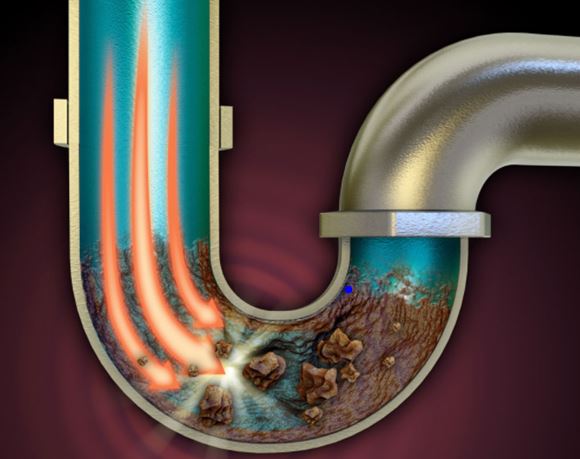
A NYC licensed plumber clearing a kitchen drain clog caused by grease buildup in a pre-war Brooklyn apartment building.
Warning Signs the Clog Is Getting Worse
A kitchen drain clog rarely appears overnight. It builds up over weeks. Watch for these signs — because the earlier you catch it, the cheaper the fix.
- Water pools in the sink for more than 30 seconds before draining
- Gurgling sounds when you run the tap or dishwasher
- A rotten or sewage smell coming up from the drain
- Water backing up into the second bowl of a double sink
- The garbage disposal runs but the sink still fills
- The same drain keeps clogging every few weeks
- Other drains in the apartment slow at the same time
3 DIY Fixes Worth Trying First
These work for mild, recent clogs. They will not fix a clog caused by years of grease buildup or a shared stack blockage. However, they are worth trying before you call a plumber.
Boil a full kettle and pour it slowly down the drain in three stages, waiting 30 seconds between each pour. This works well on fresh grease — it re-liquefies the fat so it can flush through. Do not do this on PVC pipes, as extreme heat can warp the plastic.
Pour half a cup of baking soda down the drain, then follow with half a cup of white vinegar. Cover the drain opening and let the mixture react for 20 minutes. Then flush with hot water. This works on soap and light food residue — not on hardened grease. It is safe for all pipe types.
Use a cup plunger on the kitchen drain. If you have a double sink, plug the second drain with a wet cloth first so the pressure goes in one direction. Work the plunger firmly for 10 to 15 seconds. This can dislodge soft clogs close to the drain opening.
Kitchen Drain Clogged in NYC? We Fix It Today.
Same-day service across Manhattan, Brooklyn, Queens, the Bronx, and Staten Island. Upfront pricing. No hidden fees.
📞 646-580-7524 Get a Free QuoteWhat a Professional Plumber Does That DIY Can’t
When DIY doesn’t work — or when the clog keeps coming back — a licensed plumber has two tools that actually solve the problem.
Cable Snaking (Drain Augering)
A plumber feeds a long, motorised cable into the drain. The rotating tip breaks through the clog and pulls debris back out. This is the right fix for most straightforward kitchen clogs — food buildup, a single grease plug, or a P-trap blockage. In NYC, it typically costs $150 to $350 depending on the depth and difficulty.
Snaking breaks the clog. However, it doesn’t clean the pipe walls — which is why clogs come back if grease has been building up for years.
Hydro Jetting
Hydro jetting sends a high-pressure water stream through the pipe at 3,000 to 4,000 PSI. It removes the clog and cleans the full inside surface of the pipe — grease, mineral deposits, soap film, everything. The result is a pipe that drains like new.
This is the right fix for recurring clogs, old cast iron pipes in pre-war buildings, and shared stack cleanouts. In NYC, hydro jetting typically costs $300 to $800. However, it prevents the $400+ emergency call that usually follows a year of ignored buildup.
A good licensed plumber will also check the P-trap under the sink and inspect the drain line with a camera if the clog keeps returning. That camera inspection — typically $100 to $200 — identifies any cracks, root intrusion, or pipe collapse that no other method can find.
How Much Does a Kitchen Drain Clog Fix Cost in NYC?
Here are real 2026 price ranges for NYC — not national averages.
| Service | NYC Cost Range |
|---|---|
| Basic kitchen drain snaking | $150 – $350 |
| Hydro jetting (kitchen line) | $300 – $800 |
| P-trap removal and cleaning | $100 – $200 |
| Drain camera inspection | $100 – $200 |
| Emergency same-day call fee | $75 – $150 additional |
How to Prevent Kitchen Drain Clogs in Your NYC Apartment
Once the clog is cleared, these habits keep it clear.
- Never pour grease or cooking oil down the drain. Cool it in a container and throw it in the bin. This single habit prevents the majority of kitchen drain clogs in NYC.
- Use a sink strainer at all times. A $5 mesh strainer catches food scraps before they enter the pipe. Clean it after every use.
- Stop putting coffee grounds down the drain. Put them in the rubbish or use them as compost. They compact into a solid plug inside old cast iron pipes.
- Run cold water for 30 seconds after using the garbage disposal. Cold water keeps fats solid so they flush through rather than coating the pipe walls. Furthermore, it clears any remaining particles from the disposal.
- Flush with boiling water once a month. A monthly hot water flush keeps light grease from hardening. Takes 60 seconds and costs nothing.
- Book an annual professional cleaning. Especially in pre-war buildings in Manhattan, Brooklyn, Queens, and the Bronx — annual hydro jetting removes the buildup that home remedies cannot reach. It costs $300 to $500. The alternative is a $400 to $800 emergency call when the pipe finally blocks completely.
Frequently Asked Questions
If your kitchen drain clogs repeatedly, the issue is almost always grease buildup on the pipe walls — not a single clog. Each time you snake it, the clog breaks through. However, the greasy surface remains and catches the next wave of debris within weeks. The fix is hydro jetting, which cleans the pipe walls entirely. Pre-war buildings in Manhattan, Brooklyn, Queens, and the Bronx are especially prone to this because their cast iron pipes have rough interiors that grease sticks to.
We don’t recommend it — especially in older NYC apartments. Chemical drain cleaners contain harsh acids and lye that corrode cast iron and galvanised pipes, which are still common in pre-war buildings. They also fail on grease clogs because they cannot dissolve solidified fat. Worse, if the drain is fully blocked, the chemical sits in the pipe and damages it further. Call a plumber instead.
Basic snaking for a kitchen drain costs $150 to $350 in NYC. If the clog is deep or keeps returning, hydro jetting costs $300 to $800 but provides a lasting clean. Emergency same-day service may add a $75 to $150 call fee. In most cases, a standard kitchen clog is fixed in one visit. Plumbing NYC provides upfront pricing before we start — no surprises.
Most kitchen drain clogs are cleared in 30 to 60 minutes. A simple snake job is often done in under 30 minutes. Hydro jetting takes 45 to 90 minutes depending on the length and condition of the pipe. A camera inspection adds another 20 to 30 minutes. Our plumbers carry all equipment on the truck — there is no waiting for parts or a second visit.
Not usually — unless water is backing up into the sink from another drain, coming up through the floor, or flooding the cabinet under the sink. Those signs point to a shared stack or sewer line blockage, which is an emergency. A slow-draining or non-draining kitchen sink on its own is urgent but not an emergency. However, waiting more than a day or two risks water damage under the cabinet and makes the clog harder to clear.
Call Plumbing NYC — We Fix Kitchen Clogs Today
Plumbing NYC clears clogged kitchen drains across Manhattan, Brooklyn, Queens, the Bronx, and Staten Island every day. We arrive in under 30 minutes, give you an upfront price, and fix it in one visit. Licensed, insured, and in business for over 30 years.
📞 646-580-7524 Request Free Quote